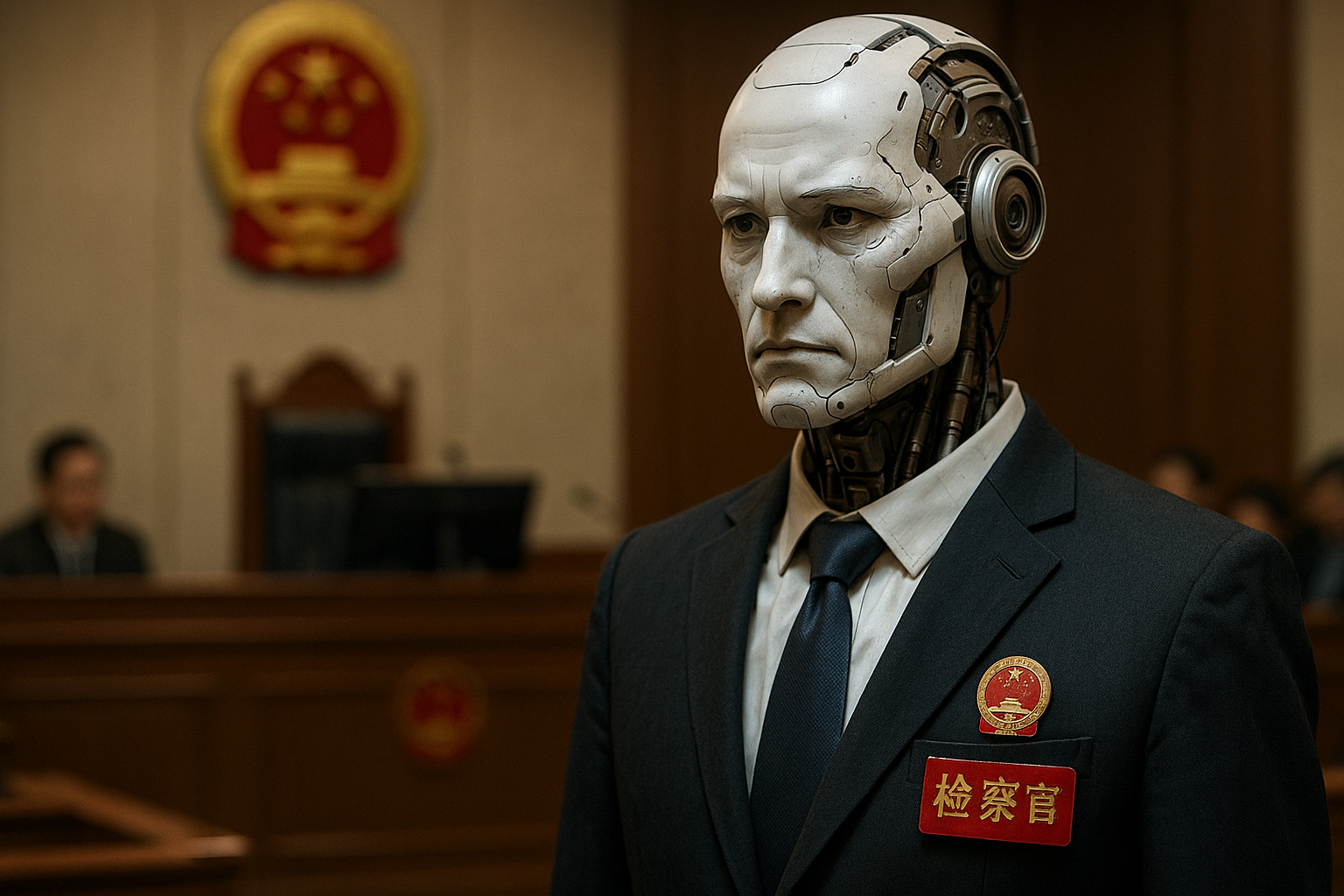
China’s First AI Prosecutor - It’s deciding who goes to jail
China’s First AI Prosecutor is Real — and It’s Charging Citizens
A shocking leap in artificial intelligence has just emerged from China, and it’s not ChatGPT or some image generator. It’s an AI that can prosecute humans for crimes — and it’s already doing it.
Developed by the Shanghai Pudong People’s Procuratorate, this AI system has been trained on over 17,000 criminal cases and is capable of filing charges against citizens without human approval.
Let that sink in.
This isn’t science fiction. The AI prosecutor is actively being used in courts to identify crimes like credit card fraud, gambling, theft, and even “picking quarrels and provoking trouble,” a vague legal term often used to silence dissent.
What’s even more chilling? The AI reportedly decides with 97% accuracy, based on the data it’s fed. It doesn’t just assist a human prosecutor — it generates the actual indictment.
You commit a crime, an algorithm reviews your behavior, matches it to criminal codes, and files charges. No lawyer, no courtroom drama, just AI logic.
Critics are sounding alarms. Legal experts in Europe and the US are calling this “the most dangerous use of machine learning we’ve seen in judicial systems.” Once you let AI decide who’s guilty, where’s the human oversight? What about moral context? What if the data is biased?
Yet, Chinese officials call it a “breakthrough in smart governance.”
This news comes just weeks after the announcement of AI-driven surveillance drones in Beijing that don’t just monitor crowds — they “predict” who might cause unrest based on walking patterns, gaze direction, and facial tension.
Put these together, and we’re staring at a real-world Minority Report. A world where crime isn’t just punished by AI — it’s predicted, prosecuted, and executed — by code.
And here’s the kicker: Several other countries are reportedly in talks to import the AI prosecutor framework — including some in Africa and Southeast Asia.
You might think, “That’s China. It won’t come here.”
But AI has no borders.
We’re officially in an era where justice might not wear a robe — it might run on silicon.
📬 Stay Updated!
Subscribe to receive the latest embedded & RTOS blog updates in your inbox.